Clear, with a low around 53. West southwest wind 5 to 7 mph.
Friday
Sunny, with a high near 85. Breezy, with a south southwest wind 5 to 10 mph increasing to 13 to 18 mph in the afternoon. Winds could gust as high as 29 mph.
Friday Night
A 30 percent chance of showers and thunderstorms, mainly after 4am. Mostly clear, with a low around 61. Breezy, with a south wind 13 to 18 mph becoming north northwest 7 to 12 mph after midnight. Winds could gust as high as 30 mph. New rainfall amounts of less than a tenth of an inch, except higher amounts possible in thunderstorms.
For the past few weeks, the Life Science students have been
studying plants. Prior to the lesson began, most expressed
that plants were NOT the most exciting organisms in the world.
However after students learned that roots, stems, and leaves
provide more exciting functions than just their 'regular' jobs
(such as the roots that dig into other roots to steal nutrients),
they changed their minds!
Recently the students began to study the reproduction of plants.
They examined flowers from around the school and saw how the
flowers parts exist in many varying forms--they were even able to
see the ovules in the ovary of a hibiscus plant.
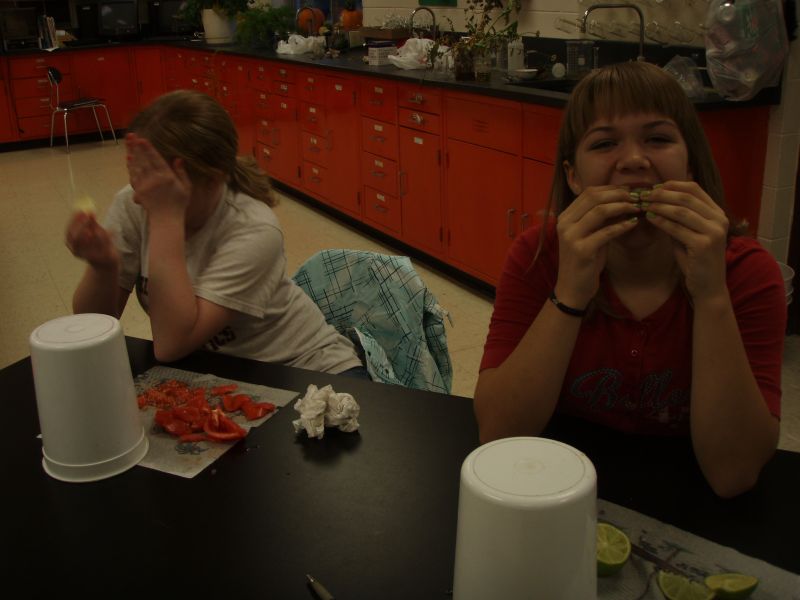
Victoriah and Hayley enjoy the fruity goodness of a tomato and a lime!
The kiwi fruit was a big hit--many didn't know it contained so many seeds.
Christian explores the inside of an avacado.
Christopher was the lone taker on the green pepper (which is the FRUIT of the plant because it contains seeds).
Victoriah and Hayley enjoy the fruity goodness of a tomato and a lime!
As students learned the scientific definition of a fruit
(a plant part with seeds), they realized that many of the plants we
call vegetables are actually the fruits of a plant
(including cucumbers, zucchini, tomatoes, and green peppers).
They examined fruits to see links between numbers of seeds
and their edibility, as well as the nature of the flesh. They
also observed evidence of flower parts (a scar remaining opposite
of the stem). They were then able to eat the fruits and taste
the variety of flavors provided by nature.
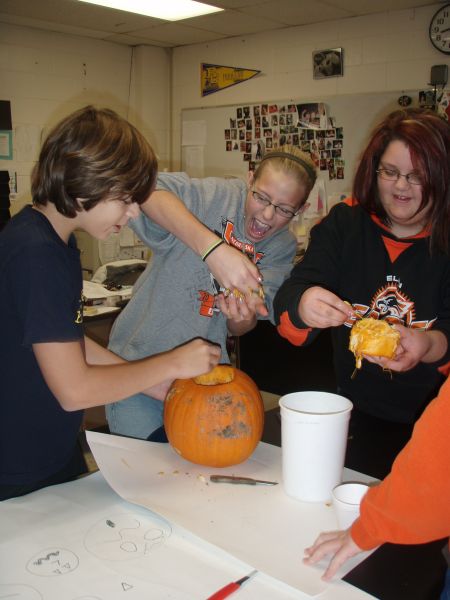
The next day students were again able to study fruits and
seeds--by dissecting pumpkins! As they enjoyed carving
Jack-O-Lanterns, they reviewed the processes that allowed this
pumpkin to grow--pollination, fertilization, seed dispersal, and
eventually germination.
This group shows how wind can disperse seeds--those with feathery projections or wings.
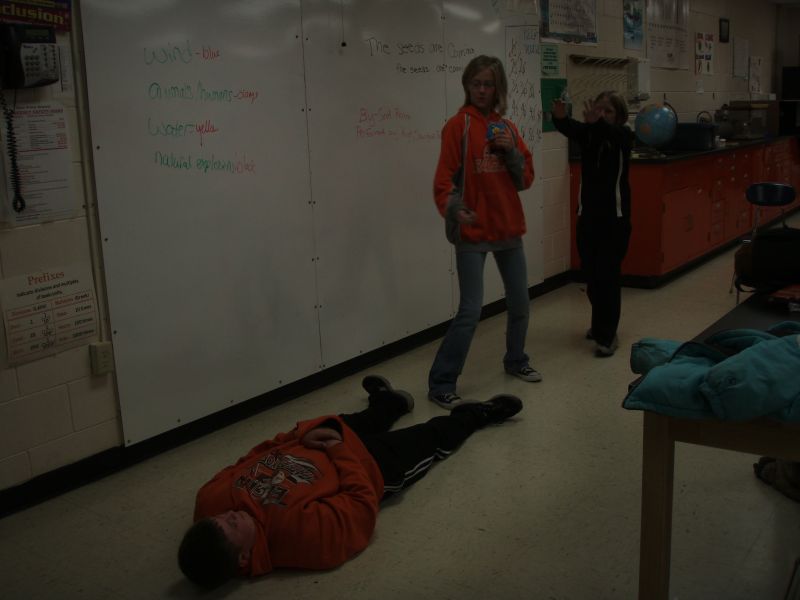
Hayley is the seed begin carried away by the water currents.
Christian is the innocent bunny, hopping through the woods. . .
This group shows how wind can disperse seeds--those with feathery projections or wings.
And finally student groups were each responsible for a skit
showing the 4 methods of seed dispersal--wind, water,
animals/humans, and natural explosions. They had a wonderful
acting debut!
To wrap up the outcome, students will be asked to create a
"Plants in Our Lives" poster depicting all the ways that we use
plants on a regular basis. To ask a 7th grader now, "Are
plants still boring?" they hopefully would respond, "No! And
they taste good, too!"
The exciting world of plants!
No comments have been added yet. Please add yours!